HSBC: Stop destroying rainforests. Sign the 38 Degrees petition.

Green Party campaigner in Kent. Also a nurse, academic, former manager, writer, Druid, husband and father...
Showing posts with label ecomonics. Show all posts
Showing posts with label ecomonics. Show all posts
Thursday, 16 May 2013


Saturday, 23 July 2011
Greece: bailouts vs investment
I was asked by my local paper to comment on what additional income from business rates should be spent on locally if local government was allowed to keep the revenue rather than seeing it redistributed across the country.
Of course, my first answer was that this would increase inequalities across the country as poorer areas attract less business and removing more of their income would make them even poorer. On the other hand, the overheating in richer areas would see even more of a boom in house prices and house building as people move to where the work and money is. It would create a lose - lose situation.
One of the advantages of a single currency and single government is that can provide a buffering mechanism for areas that are not doing so well. Government need to protect its citizens from the ebb and flow of market forces (which generally seem to be more ebb than flow).
Following the news across the Mediterranean parts of the Eurozone, mostly Greece and Italy,this situation is actually being played out on a continental scale. Areas operating under a far wider single currency are having to raise their own taxes to pay for public services and to support local economies.
Having a low maufacturing, service industry and financial industry bases puts any country in the realm of a weak economy, but having to comply with the implications of a single currency and the therefore the inability to quantatively ease without external borrowing is a recipe for disaster.
Should the Eurozone work more redistributively so that rather than bailouts with repayment requirements, there is a more simply process of country taxation and redistribution that mirrors UK local councils? Of course this would be far more unpopular than not allowing the richest councils in the UK to keep all of the rates and taxes and so won't happen, but investing in poorer countries through significant redistribution would be the ultimate economic cooperation.
As that level of cooperation is unlikely to be achieved, I suspect that the situation will rumble for a few more years with countries finally being expelled from the Eurozone to prevent its overall collapse. Of course this means that Greece could revalue and quantatively ease which may not bring drastic rewards but would help maintain some public services at least.
Thursday, 14 July 2011
Petition against the Youth Service cuts
Kent Green Party has started an online petition against the planned cuts to the Kent Youth Service that will see the closure of 24 youth centres, the loss of 64 jobs and a 60% cut in funding. Chair of Kent Green Party, Stuart Jeffery called the cuts 'ideological idiocy' as he announced the launch of the petition which is available at http://alturl.com/d8wuj
Kent County Council plans are going to their cabinet meeting on 18th July and show that they intend to take £1.7m out the the youth budget, leaving just £1.2m.
Stuart Jeffery, Chair of Kent Green Party: "Young people are being hit very hard by the recession, suffering the highest levels of unemployment, ridiculous rises in student fees and now they are seeing the youth service slashed and burned. What sort of message does this give to the next generation of leaders? I think it says that the Conservatives are profoundly uninterested in them.
"Youth services are vital to the well being of our communities, for providing guidance to young people and for giving them wider support. There are also 64 families who are facing misery and hardship due to the ideological idiocy of the Conservative and Lib Dem cuts to public sector funding. We believe this madness needs to be fought and this why we are asking the public to sign up to the petition.
"The country is not broke. National debt was proportionally higher for most of the last century and at its highest point the country even managed to start the NHS. The country's debt is proportionately lower than France and Canada and about the same as Germany, yet they are not getting hysterical about public spending. The Tory and Lib Dems claim that cuts are necessary is simply not true."
Notes:
1. Kent County Council papers available at http://democracy.kent.gov.uk/mgConvert2PDF.aspx?ID=3468&T=10
2. The full list of Youth Centre closures across Kent:
Ashford: XC Youth Centre, Sk8side Youth Centre
Canterbury: Whitstable Youth Centre
Dartford: The Bridge Youth Arts Centre
Dover: Linwood Youth Centre. Aylesham Youth Centre
Gravesham: Miracles Youth Centre, The Gr@nd
Maidstone: Shepway Youth Centre, Lenham Youth Centre
Sevenoaks: Edenbridge Community, Centre (opening 2012)
Shepway: Hythe Youth Centre
Folkestone: Youth Project
Swale: Sheerness County Youth Centre
Faversham: Youth Centre
Tonbridge & Malling: SAMAYS Youth Centre
Thanet: Concorde Youth Centre, Artwise Youth Centre
Tunbridge Wells: Mascalls Youth Centre
3. The country was in more debt for most of the 20th century than it is now including when it founded the NHS (Ref: False Economy)
4. The country has a lower debt to GDP ratio than France, Canada and almost the same as Germany (Ref: OECD - page 21)
Sunday, 10 July 2011
Debt and US and Eurozone instability
Haven't blogged much about the collapse of the Euro zone economies or indeed much about world economies for some time but a few headlines caught my eye today.
 The US unemployment rate rose again is June by 0.2% to 9.2% which equates to roughly an additional 300,000 people out of work bringing to total to 14.1 million people. The graph above says it all really, but that is still a lot of people who are suffering at the hands of the bizarre and unsustainable world economy - this time in the former economic powerhouse and not drought torn Africa.
The Torygraph is talking about the impact of debt on the Eurozone, the UK and US, predicting that their currencies will collapse soon: "At some point soon, and it brings me no pleasure to write this, private sector Western investors, together with our emerging market creditors, will drastically cut their exposure to Western sovereign debt. This will come as a rude awakening to the US and the big European sovereigns, who for years now have abused their "risk-free" status."
Inflation in the UK is holding at 4.5% for now but is expected to rise spelling misery for mortgage holders and those who continue to run up personal debt. I had a house in 1990 with a mortgage that nearly crippled me (at a rate of 16.5% I seem to remember). I lost thousands as the value of the house plummeted and it took years for my finances to recover. The impact on the economy of the loss of half a million public sector jobs has not yet been felt and it will be a shock.
What is in it for the big oil producing countries and for China to keep selling their commodities to the West, aside from ensuring that the debts continue to grow? Isn't that how the West treats developing countries? At what point will the unbalanced and unsustainable economy collapse?
The solutions are out there but they are radical and upset the ruling elite. Localising economies, taxing the rich more than the poor, not relying on economic growth, ensuring production is meaningful, useful and longlasting, and breaking the debt cycle which economies have come to depend on, would all be a good start. Without a radical shift in government these are a long way off.
Thursday, 17 February 2011
A feel-bad recovery says the IOD
Kent's unemployment has soared by 1900 in Jan. Growth was negative in the last quarter of 2010. If you make people unemployed then you will create a further recession. You can't get growth by removing work from the country. Basic economics but the Tories are trying to pursuade us that black is white.
Also from the KM, this has to be the crap comment of the week: 'Graeme Leach, chief economist at the Institute of Directors, said higher unemployment and lower numbers in work made it a "feel-bad" recovery.' WTF is a feel-bad recovery?
Whether we have growth or not, the whole point is that we should not 'feel-bad. I don't support unfettered growth but the key point is that we need to get people into work and ensure that public services meet the needs of the population. To do that we need proper taxation of the rich.
Wednesday, 5 January 2011
Too much happening to blog about...
- Disgusted that they can call this green. Treating animals (and Nature in general) in this way is as far from green philosophy as you can get. Raising pigs in factories also has no place in a green society. Disgusting.
- Latest U-Turn by Clegg, this time on control orders. What happened to the liberal part of Liberal Democrat?
- Castro's medical mission marches on to the shame of the civilised West. This time Cuban medics are in force in Haiti. 1200 of them. How many have the US or UK sent I wonder?
- Maidstone's town centre manager is quoted as saying: "Recession, what recession?" after higher than normal sales in the post Christmas period. I'm sure he meant no offence but I doubt the public are in such a boyant mood, I suspect they were having one final splurge before hunkering down.
- It seems that the FT are worried about the burgeoning oil price and its threat to the recovery. Oil hit $95 last week and I think the $148 high was part of the reason for the last economic collapse. Peak oil happened in 2006 and White's Law says the economy needs energy.
Wednesday, 10 November 2010
£95bn of tax evasion and avoidance
"We are living in a country where the poor bail out the banks, while the rich keep their billions intact" - Monbiot
To the stunning levels of tax avoidance, £25bn need to be added the crazy levels of tax evasion, a further £70bn according the the PCS. You could almost be forgiven for thinking that this is the real economic crisis?
Meanwhile the government is shitting on poorer people.The Comprehensive Spending Review and cutting of government spending by one third primarily affects people on lower incomes and increases the gap between rich and poor.
My lack of blogging in recent weeks has been as a direct result of the anger I'm feeling towards a cabinet made up of millionaires who have not had any experience of real life, no experience about what it means to not know how you are going to afford to eat, no experience of looking in the cupboard and finding little food in there, no experience of finding out how to cook an 8p meal and then quickly getting bored with eating the same thing for a month.
All the time we have people who have not directly experienced real life and who are only interested in their own economic growth, we won't have justice.
Friday, 24 September 2010
Coalition of Resistance
Organise against the cuts - this is from the Coalition of Resistance:
What is the Coalition of Resistance and what does it do?
The Coalition of Resistance …
What is the Coalition of Resistance and what does it do?
The Coalition of Resistance …
- is a broad united national campaign against cuts and privatisation in our workplaces, community and welfare services, based on general agreement with the Founding Statement issued by Tony Benn in August 2010.
- is linked to no particular political party, but committed to open working in a non-sectarian way with all organisations seeking to co-ordinate resistance; and is dedicated to supplementing, rather than supplanting, trade union, student, pensioner and community opposition to austerity measures.
- is based on thousands of individual supporters, together with national unions, union branches, anti-cuts campaigns, student, pensioner, unemployed, youth and other organisations which affiliate.
- seeks to provide a national umbrella for a network of local and sectoral campaigns; and aspires to support, encourage, coordinate, and facilitate a transfer of experience rather than to command.
- invites affiliation from functioning local campaigns championing public services or fighting the cuts; encourages the establishment of new local campaigns where there are none; and offers local campaigns the opportunity to call themselves local Coalitions of Resistance if they wish.
- organises newsletters, a website www.coalitionofresistance.org.uk , meetings, conferences, lobbies, rallies, marches, demonstrations and other events.
- vehemently opposes all proposals to “solve” the crisis by discrimination or scapegoating on the grounds of disability, race, religion, ethnic origin, gender, age, sexual orientation or identity.
- liaises closely with similar opposition movements in other countries and has issued a call for international resistance to austerity measures.
- encourages a wide debate on how to protect the welfare state and develop an alternative programme for economic and social recovery in line with its founding statement.
- is run by a steering committee meeting on a weekly basis and advised by periodic meetings of activist supporters of the founding statement until the Founding National Conference on 27th November 2010.
Sunday, 12 September 2010
Cuts deepest for the vulnerable
According to the TUC: "Excluding benefit cuts, single people will lose the equivalent, on average, of £817 a year in services, while a couple with no children will lose £1,012 and a single pensioner £1,017. A lone parent, meanwhile, will lose £1,880."
Meanwhile the Mail says: "The latest figures show that after years of Labour profligacy, up to 30 per cent of all jobs are now in the public sector in some regions of the UK." Wow, 30% of jobs are in professions supporting society especially the poor and vulnerable - how profiligate! Just imagine what would happen to these people if this support was slashed...
The Mail also quotes research, this time from Experian (the same people who are going to spy on us via their credit scoring system... buy a book and you are a benefit cheat etc.) that the North, Scotland and Wales will be hardest hit by the public sector cuts. The South East will get off lightest as we have the lowest proportion of people employed in the public sector - so that's alright then as the Tories need to make sure their areas take the least pain.
While these cuts are being fronted by the Tories, let us not forget that the LibDems are utterly complicit in this.
Sunday, 15 August 2010
Tuesday, 3 August 2010
Take money out of the economy and it will shrink
This from the New Statesman: Growth of 1.1 per cent in the second quarter is likely to be as good as it gets for Osborne in 2010. Britain, like the rest of the world, can no longer rely on the US to act as the buyer of last resort.
Bad news for Camerclegg's claims then, I do wonder how these politicians can have such a poor grasp of economics.If you take money out of the economy it is likely to shrink...
Understanding economics is a must for all politicians and especially so for green ones. That doesn't mean that we need to accept all of the received wisdom. For example growth is not usually good. Growth is fine in some sectors but not in all and certainly simply going for growth will lead to collapse of social and environmental systems.
Sunday, 18 July 2010
The folly of economic growth
Useful piece in the New Internationalist on economic growth. Real profit and economic growth relies on exploitation of resources, both human and natural. Some growth may be possible, e.g. by exploiting the sun's energy, but we are so far over the level of consumption that the planet can cope with that further growth from where we are now cannot happen. And as the majority of modern economic growth has been fueled by oil, it is likely to end soon.
Economic decline is inevitable, it will either happen chaotically through the increasing cost of exploiting resources, such as tar sands, or it could be done in a managed and coherent way that makes life better. Either way, there will be a reduction in the exploitation of resources as the current rates can't continue.
You might think that Greens would welcome the ConDem government politicies which will quickly lead to economic decline. I suspect I would welcome them if they made society more equal, focussed on getting rid of the profit motive, reduced exploitation, protected the vulnerable and provided some infrastructure that reduces our need to consume. Sadly they are doing the opposite.
The key question is how can we make the best use of this time of decline, both as individuals and as a society.
Tuesday, 27 October 2009
Inequalities and the case for a Maximum Wage
This piece appeared on The Daily (Maybe) yesterday and in true Re-Tweet fashion I've posted it here too (as it was written by me).

Thirty years ago a newly elected Conservative government attempted to quash a ground breaking report by Douglas Black. The report, commissioned by the previous government, was a clear indictment of the impact of poverty (and relative poverty) on health. Just few hundred typed copies of the Black Report, as it come to be known, were ever published but the impact of the report was significant and has been a basis for public health thinking ever since.
Moving forward 30 years, The Equality Trust explain in graphic detail how it is not only poorer countries that have poor health outcomes, but also that countries which have higher inequalities have poorer health outcomes. These poor health outcomes are not just relating to physical health but stretch across the full spectrum from mental health to societal health (for example violence, community cohesion and social mobility).

The evidence is clear, an unequally society is a poor society. The evidence is also clear that Britain has become more unequal; this quote is from National Statistics: "Between 1981 and 1989 disposable income in real terms grew by 38 per cent for those at the 90th percentile. This was more than five times the rate of growth of 7 per cent for those at the 10th percentile.". A quick look at their graph of income since 1971 shows that the gap between rich and poor has grown continually except for a short period in the mid 1970's.
National Statistics also report that '1992 to 2006/07 was a period of relative stability' for income inequality. The minimum wage, introduced in 1999, has had an impact for some but it simply hasn't achieved the narrowing of relative poverty that is required. Two further mechanisms for household income are necessary, a citizens income and a maximum wage.
Maximum wage is simply capping the maximum earnings of an individual, either through the use of a tax bracket that returns 100% of the earnings to the state or through primary legislation to prevent employers paying over a particular ceiling. Practically speaking, a 100% tax bracket looks like the most effective method of implementing a policy as it should capture unearnt income and income from multiple sources (assuming that people don't dodge tax!).
While there are those in favour of a maximum wage, such as Andrew Simms from the New Economics Foundation, there are of course detractors on the right of the political spectrum. It is easy to see why it is the right wingers who are opposed, given that the majority of high earners are on the political right and the rest of the right are desparate to join them. The Adam Smith Institute claims that the country's most productive workers (doctors, business owners and bankers - it does actual put bankers in this category) would move abroad. They go on to suggest that the best was to reduce poverty is through the 'Trickle Down' of wealth.
Standard right wing thought but the evidence goes contrary to this.
Firstly the concept of 'Trickle Down'. It is surely time for this phrase to be consigned to the dustbin of patronising and obnoxious terms. Trickle down suggests that the elite should hold the nations wealth and provide a little cash to the underclasses to stop them starving. It suggests that people are not equal and shouldn't strive to be. It keeps the ruling class, er... ruling.
The concept of trickle down serves to widen the poverty gap within countries by enforcing and expanding the existing inequalities. Sure, it will address absolute poverty and may increase a nations overall wealth, but that is not what needs to be addressed.
Secondly, the claims that productive workers will flee the country are without evidence. Of course the Adam Smith concept of 'productive' is a little different to the concept held by the majority of people. Ask the man on the Clapham omnibus whether he considers nurses or bankers to be more productive!
Concerns about highly skilled workers fleeing the country are also misguided. In Cuba, doctors are paid around twice the national average wage, compared to around four times in the UK, however Cuba has one doctor for every 174 people and the UK has one for every 600. There would be a balance of greed versus good community that people would weigh up before emigrating for financial reasons. If society was cohesive and enjoyable, it is unlikely that most would want to leave for a country where the quality of life was poorer. There is far more to life than hard cash.
Assuming that the majority of the arguments currently against a maximum wage are false, there remain just two questions. Firstly would a maximum wage actually help to reduce inequalities and secondly what should the level of maximum wage be?
If the approach of a 100% tax bracket is used and the taxes are reinvested in citizen's income / health care / regeneration / redistributive schemes, then it is clear that inequalities will reduce. The longer term picture of a 100% tax bracket gives similar results to a maximum wage through primary legislation over time as companies stop advertising jobs with huge salaries. As total income, including unearnt income from profits, could not exceed the maximum, money would need to be spent somewhere in society over time (unless company's reserves get bigger and bigger - maximum profits legislation anyone?). The gap between the rich and poor will start to close.
And as for the maximum wage... let's start at £150k and reduce it by £5k a year to £100k. Anyone not able to survive on £150k or even £100k needs to think very carefully just what they are doing to society and the planet.
Moving forward 30 years, The Equality Trust explain in graphic detail how it is not only poorer countries that have poor health outcomes, but also that countries which have higher inequalities have poorer health outcomes. These poor health outcomes are not just relating to physical health but stretch across the full spectrum from mental health to societal health (for example violence, community cohesion and social mobility).
National Statistics also report that '1992 to 2006/07 was a period of relative stability' for income inequality. The minimum wage, introduced in 1999, has had an impact for some but it simply hasn't achieved the narrowing of relative poverty that is required. Two further mechanisms for household income are necessary, a citizens income and a maximum wage.
Maximum wage is simply capping the maximum earnings of an individual, either through the use of a tax bracket that returns 100% of the earnings to the state or through primary legislation to prevent employers paying over a particular ceiling. Practically speaking, a 100% tax bracket looks like the most effective method of implementing a policy as it should capture unearnt income and income from multiple sources (assuming that people don't dodge tax!).
While there are those in favour of a maximum wage, such as Andrew Simms from the New Economics Foundation, there are of course detractors on the right of the political spectrum. It is easy to see why it is the right wingers who are opposed, given that the majority of high earners are on the political right and the rest of the right are desparate to join them. The Adam Smith Institute claims that the country's most productive workers (doctors, business owners and bankers - it does actual put bankers in this category) would move abroad. They go on to suggest that the best was to reduce poverty is through the 'Trickle Down' of wealth.
Standard right wing thought but the evidence goes contrary to this.
Firstly the concept of 'Trickle Down'. It is surely time for this phrase to be consigned to the dustbin of patronising and obnoxious terms. Trickle down suggests that the elite should hold the nations wealth and provide a little cash to the underclasses to stop them starving. It suggests that people are not equal and shouldn't strive to be. It keeps the ruling class, er... ruling.
The concept of trickle down serves to widen the poverty gap within countries by enforcing and expanding the existing inequalities. Sure, it will address absolute poverty and may increase a nations overall wealth, but that is not what needs to be addressed.
Secondly, the claims that productive workers will flee the country are without evidence. Of course the Adam Smith concept of 'productive' is a little different to the concept held by the majority of people. Ask the man on the Clapham omnibus whether he considers nurses or bankers to be more productive!
Concerns about highly skilled workers fleeing the country are also misguided. In Cuba, doctors are paid around twice the national average wage, compared to around four times in the UK, however Cuba has one doctor for every 174 people and the UK has one for every 600. There would be a balance of greed versus good community that people would weigh up before emigrating for financial reasons. If society was cohesive and enjoyable, it is unlikely that most would want to leave for a country where the quality of life was poorer. There is far more to life than hard cash.
Assuming that the majority of the arguments currently against a maximum wage are false, there remain just two questions. Firstly would a maximum wage actually help to reduce inequalities and secondly what should the level of maximum wage be?
If the approach of a 100% tax bracket is used and the taxes are reinvested in citizen's income / health care / regeneration / redistributive schemes, then it is clear that inequalities will reduce. The longer term picture of a 100% tax bracket gives similar results to a maximum wage through primary legislation over time as companies stop advertising jobs with huge salaries. As total income, including unearnt income from profits, could not exceed the maximum, money would need to be spent somewhere in society over time (unless company's reserves get bigger and bigger - maximum profits legislation anyone?). The gap between the rich and poor will start to close.
And as for the maximum wage... let's start at £150k and reduce it by £5k a year to £100k. Anyone not able to survive on £150k or even £100k needs to think very carefully just what they are doing to society and the planet.
Sunday, 11 October 2009
Council cuts are wrong, wrong, wrong
Back to work! With a well earned rest after the by-election it is back to campaigning. Below is a letter to the Kent Messenger on the proposed council cuts in Maidstone.
Dear Editor,
Local Conservative plans to cut spending by £1m during the recession (KM, 9th Oct) may mirror the national race for cuts by the big three parties, however cuts during a recession are wrong and are based on a poor understanding of economics.
Maidstone's unemployement levels have doubled in the past 12 months and cutting jobs funded by the council will simply add more people to the dole queue while pushing the local econonmy further into recession. The council should draw upon reserves to see us through the recession, after all that is what reserves are for!
While an age of austerity may be good for tempering the endemic consumerism that has wreaked havoc on our environment, reducing consumption needs to be combined with protecting jobs and making society more equal. Inequalities are already rife and increasing unemployment will make them worse. If the council pay bill has to reduce, reductions should come from the higher paid staff not through job cuts.
Stuart Jeffery
Green Party Parliamentary Candidate for Maidstone and the Weald
Tuesday, 30 June 2009
Doom and gloom at the OECD
The latest doom and gloom economic pronouncement from the OECD is hardly surprising. In the past year of crashing economies nothing has been done to address the underlying issues of corporate greed, over consumption, lack of investment in sustainable green collar job, the banking / monetary system and most of all our dependency on finite fossil fuel resources.

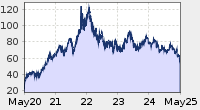
The oil price has steadily risen over the last six months to its pre-peak level, a sure sign that the demand / supply gap has closed. I doubt whether the price will rise to its Jun 08 peak any time soon as any rising price of oil will have a negative impact on the rest of the world's economy and as the world economy dives the demand for oil drops along with its price.
All the time we have a world economy predicated on oil, coal and gas, all of which are finite and will therefore fall in supply we will grind along on this long spiral of recession. We need to kick the carbon habit and base our main economic input (energy) on somthing that it a little less finite
Wednesday, 22 April 2009
Budget shows that grey parties haven't a clue about money
All three main parties have become fixated with, and enslaved by, a social construct that they clearly don't quite understand, i.e. money.
They want economic growth which equates to more consumption and is generally regarded to need more money, yet all of our money is created through borrowing.
They say consumer debt is too high, government debt is too high, business are in debt, etc. and seem to want to reduce the levels of debt, which begs the question where is their desire for more money going to come from?
It is time to accept that we make debt OK (i.e. reduce the need for fast repayment, high interest rates and excess profits being made from lending) or we simply get government to create the money and spend it on useful things (obviously with strict controls over fraction reserves and derivatives to prevent run away inflation).
Tuesday, 10 March 2009
Labour's record on redistribution
The chilling picture of a Victorian sized poverty gap painted by the Indy demonstrates just how far free market capitalism has travelled and the mire that it has left in its wake.
Inflation is hitting poorer people hard while leaving the rich to benefit from falling petrol prices and mortgage rates. The Institute of Fiscal Studies have shown that the poorest pensioners are suffering with 6.9% inflation while people with large mortgages got an effective pay rise of £10k. Inflation is running at 4.7% for people renting privately, 4.9% for people with no mortgages and 6.1% for people in local authority housing.
"The IFS analysis reveals that in January 2009 the richest fifth of households had an average inflation rate of minus 1 per cent; the poorest fifth had an average inflation rate of 5.3 per cent."
Of course, if this picture had emerged at the end of 12 years of socialism, I would argue that socialism doesn't work, however the country has witnessed policies that right wingers could only dream of: bank deregulation and bail out, privatisation of mail and health, and so on.
The poverty trap caused by the benefits system is an appalling indictment of Labour's (and prior to that Tory) policy.
We need to introduce a basic minimum income for everyone - a citizen's income, an income that people can top up with earnings without fear of losing it. An income that people can live on, that can't be taken away, that reduces the fear of trying to get by.
Pensioners need a decent income. Pension funds are crashing with stock markets, saving are attracting no interest. People who have worked and saved are struggling. The state should stop bailing out the banksters, and simply bring banks under democratic control.
Put bail out money towards people and projects that need it. Poorer people and pensioners need this money!
Subscribe to:
Posts (Atom)